AI adoption in Indian corporate real estate has surged from under 5% in 2023 to 91% in 2025, yet most workplaces were planned for yesterday’s technology load and retrofitted piecemeal as the digital stack expanded. AI raises the stakes: it increases reliance on resilient connectivity, secure data movement, dependable power, intelligent building systems, and spaces that can evolve without disruptive rework. This blog translates “AI-ready” from buzzword to a practical design-and-build roadmap for CRE leaders, facility heads, and workplace strategists.
The infrastructure gap is real (and widening)
Only 28% of organizations believe their infrastructure can support AI workloads, even as 83% say upgrades are needed to run production-grade agentic AI. Power availability has become a top concern for 65% of data center operators, up from 38% two years ago, according to Cisco (2025). In India, Grade-A office absorption hit record levels in 2025, but many buildings still struggle to keep pace with AI’s demands for constant connectivity and system performance, exposing a resilience gap for landlords and occupiers alike.
What “AI-ready workplace infrastructure” actually means
AI readiness rests on seven infrastructure layers that must be designed together, not bolted on:
- Power resilience for uninterrupted digital operations (provisioned circuits, UPS, and density planning at rack/zone level).
- Connectivity built for cloud access and distributed teams (high-bandwidth, low-latency, redundant paths).
- Secure, flexible IT and edge environments (zero-trust principles, segmentation, and governance baked into the data path).
- Cooling designed for real heat loads, not assumptions (air, rear-door, or liquid solutions matched to sustained high-density loads).
- Integrated physical and cyber/OT security (access control, CCTV, and telemetry unified with cyber defenses).
- Interoperable building data architecture (BMS, IoT, and workplace platforms that share clean, governed data).
- Adaptable spatial backbone (zones that can scale or repurpose without major rework as tech and teams evolve).
The goal is not to turn every office into a data center. It is to create a workplace backbone that can accommodate new technologies, changing risk profiles, and future capacity needs.
Sector-specific risk profiles, where AI readiness hits differently
Financial services
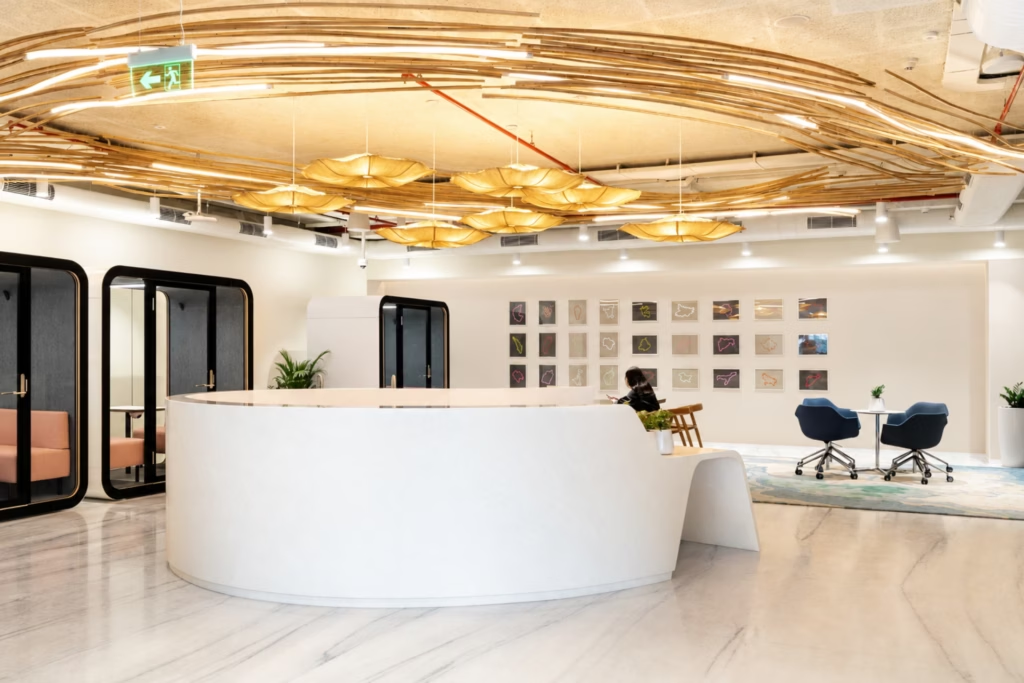
Image Courtesy: Financial Services Firm, Bengaluru
For banks, NBFCs, and fintech, AI readiness means resilient power and connectivity with physical security integrated into a wider data-security and governance strategy. High-density inference workloads and real-time analytics require UPS-backed zones, redundant fiber paths, and strict access controls that align with regulatory expectations.
Technology firms and GCCs
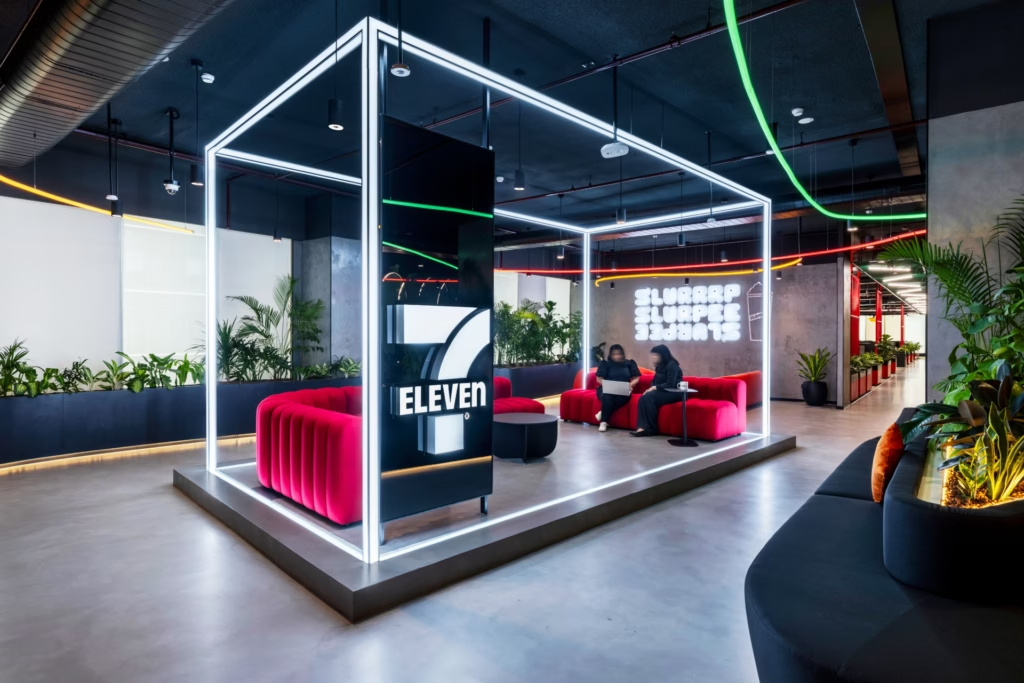
Image Courtesy: 7-Eleven Global Solutions Center, Bengaluru
For technology companies and Global Capability Centres, AI readiness means networks, collaboration environments, and IT infrastructure that can support distributed teams at scale. Senior employees need infrastructure, not rows of desks; ~78% of firms cite high-speed connectivity as a top workspace priority, ~62% prioritize video-conferencing infrastructure, and ~50% prioritize large collaboration and workshop spaces.
Manufacturing and industrial operations
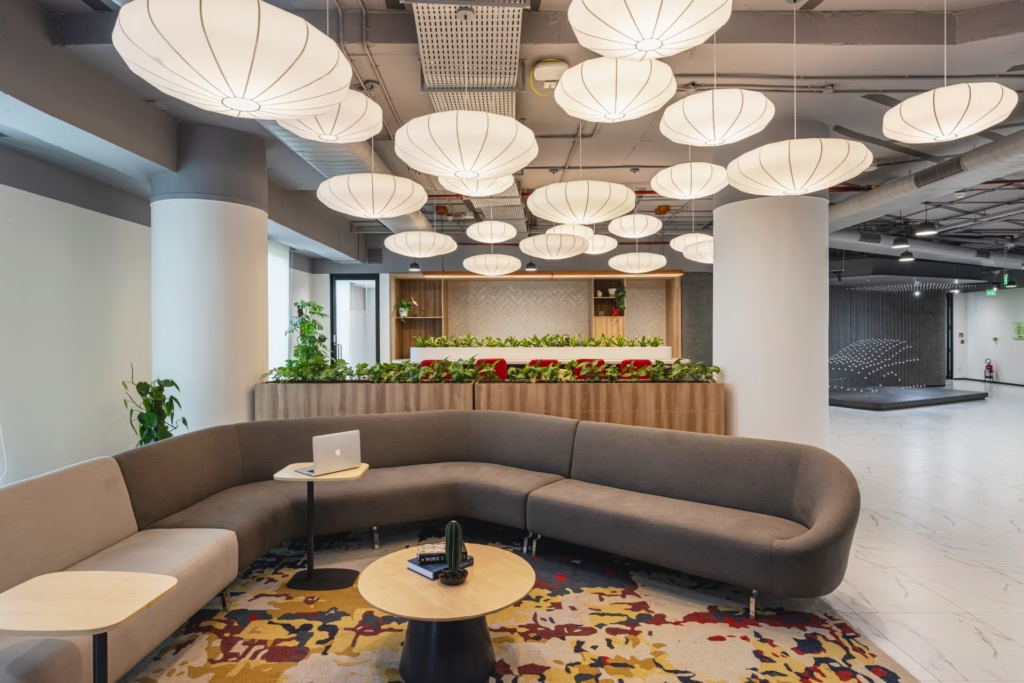
Image Courtesy: International Automotive Brand, Bengaluru
For manufacturing, AI readiness means dependable infrastructure designed around 24/7 operations, OT/IT security, and continuity at the edge. Bridging the legacy OT/IT gap with real-time telemetry, secure connectivity, and millisecond redundancy is critical as AI moves from pilots to production on the shop floor.
A practical design-and-build roadmap that CRE can execute
1) Audit your reality. Map existing power, cooling, network, BMS, and security systems against current and projected AI workloads.
2) Define success with KPIs. Tie initiatives to measurable outcomes: uptime, energy intensity, space utilization, and time-to-scale for new tech.
3) Build bridges, not silos. Stand up cross-functional teams (CRE, IT, HR, Finance, Security) from day one to avoid fragmented upgrades.
4) Design the backbone to scale, then build in flexibility. Prioritize high-density power and cooling capacity, redundant connectivity, and modular zones that can be repurposed without disruptive rework.
5) Strengthen data architecture before scaling AI. Ensure interoperability, data quality, and governance across BMS, IoT, and workplace platforms so AI can actually operate on clean signals.
6) Integrate security into the data path. Treat every connection as untrusted by default, enforce identity- and application-specific policies, and monitor AI workloads independently.
7) Embed energy management as a strategic imperative. Invest in metering, monitoring, and analytics to optimize usage, control costs, and meet evolving compliance and ESG targets.
Why this matters for your portfolio (and your P&L)
Premium, green-certified assets already command rental premiums of 15–20% with occupancy between 80–90%, while legacy stock faces a stark choice: invest aggressively or accept marginalization. The retrofitting opportunity in India already exceeds INR 500 billion, and assets that fail to meet the new threshold of AI-readiness, sustainability, and digital infrastructure risk becoming structurally irrelevant. Put simply: AI-ready infrastructure is now a leasing, valuation, and risk-management lever, not just an IT project.
Our point of view: human-centric, future-proof, and measurable
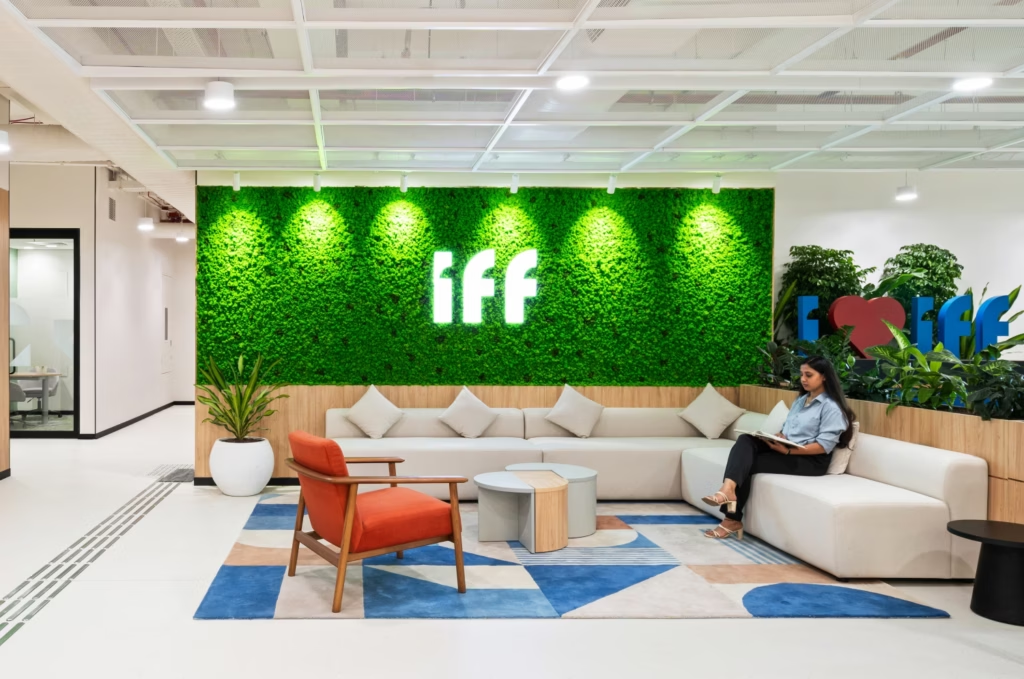
At Zyeta, we design workplaces that balance operational efficiency with human experience, integrating green building certifications, resource-efficient systems, and human-centric design so environments are both environmentally responsible and supportive of employees’ needs.
Our recent sensory-driven workplace for IFF Hyderabad delivered ~33.3% energy savings, ~30.6% reduction in GHG emissions, and ~25.5% reduction in energy costs, while achieving ~50% reduction in indoor water use and reusing treated water for 81.9% of the building’s demand.
That is the kind of measurable, future-proof performance AI-ready workplaces must deliver.
Is your workplace designed for the AI readiness your business now needs? If you’re planning a new fit-out, retrofit, or GCC expansion, talk to our experts in workplace strategy and design team to build an AI-ready backbone that scales with intelligence, not just bandwidth.
Related Reads:
How is AI-driven Design Revolutionizing Office Spaces in Singapore?
07 Strategic Workplace Design Imperatives for India’s Evolving GCCs